Inspiring Book Summary
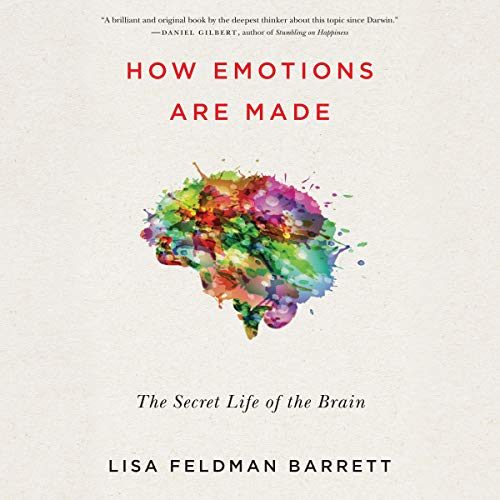
How Emotions are Made
the Theory of Constructed Emotion
How Emotions Are Made by Lisa Feldman Barrett is a revolutionary and mind-bending book that redefines what emotions are and how they work in the brain. It dismantles much of what we’ve been told by traditional psychology and opens up profound possibilities for emotional self-mastery, influence, and identity design.
📘🔬 Summary of “How Emotions Are Made” – Lisa Feldman Barrett
👩🔬 Who Is the Author?
Lisa Feldman Barrett is a distinguished neuroscientist and psychologist whose research challenges the classical view of emotions as universal, hardwired reactions. She presents a new theory — the Theory of Constructed Emotion — based on cutting-edge neuroscience.
🧠🌩️ Core Premise: Emotions Are Not Hardwired — They Are Constructed
We’ve been taught that emotions like anger, fear, sadness, or joy are universal, built-in programs — triggered by specific situations. Barrett says: That’s a myth.
💡 Her theory:
Emotions are predictions. They are not reactions. Your brain constructs them — on the fly — using past experiences, bodily sensations, cultural learning, and context.
Your brain guesses what is happening in the body and environment, and gives it emotional meaning. Emotion is not felt — it is assembled.
🧠 The Key Concepts
1. 🔮 The Brain Is a Prediction Machine
Your brain’s #1 job is to keep you alive by predicting your body's needs before they arise. This includes predicting:
- What you’re feeling
- What you’re seeing
- How you should act
Emotions are part of this predictive modelling — not reactive programs.
2. 🧱 Emotions Are Constructed from Core Ingredients
Emotions are built — not triggered — using these ingredients:
- Interoception: Sensations from inside the body (heart rate, gut tension, etc.)
- Concepts: Learned emotional categories (anger, joy, shame, etc.)
- Social & cultural scripts: What your culture teaches you to expect
- Past experiences: What your brain has seen before
Your brain puts all this together in the moment — and labels it with an emotion.
3. 🌍 Emotions Are Not Universal
Contrary to popular belief (and Paul Ekman’s “universal expressions” model), emotions:
- Do not look the same across cultures
- Do not have one-to-one facial expressions
- Are not biologically fixed
You learn how to be angry, happy, or jealous from your environment.
4. 🧬 Your Brain Creates Emotion Through "Concepts"
Emotion concepts (like “sadness” or “pride”) are mental models that your brain uses to interpret sensory input.
The richer your emotional vocabulary and experiences, the more precisely your brain can construct the right emotional responses.
5. 🔄 Emotions Shape Your Reality
Because emotions are predictions, they actually influence:
- What you notice in your environment
- What you remember
- How you act
So… changing your emotional concepts literally reshapes your experience of reality.
🧘♂️💡 Practical Life Lessons from the Book
✅ 1. You Can Retrain Your Emotional Brain
Since emotions are learned and constructed, you can teach your brain new emotional patterns.
How:
- Expand your emotional vocabulary (“I feel overwhelmed” → “I feel frustrated, overstimulated, and powerless”)
- Use journaling to reframe emotional experiences
- Learn new concepts from different cultures and languages
The more precisely you can name it, the more control you have over it.
✅ 2. You Are Not a Victim of Emotional Reactions
You’re not “angry because someone triggered you.” Your brain predicted “anger” based on past patterns.
That means you can interrupt and change the pattern.
Try:
- Noticing physical sensations first (e.g., “tight chest” instead of “anxiety”)
- Labelling emotions more subtly
- Asking: What story is my brain creating right now?
✅ 3. Regulate Emotions by Managing the Body Budget
Your brain predicts based on your body’s needs (its “budget” of energy, glucose, oxygen, etc.). When your budget is off, you’re more likely to create negative emotions.
How to optimize your body budget:
- Sleep well
- Eat consistently
- Stay hydrated
- Move your body
- Reduce chronic stress
- Connect with people you trust
A tired, depleted brain predicts stress and threat. A nourished brain predicts resilience and ease.
✅ 4. Words Are Tools of Emotion
The language you use literally builds the emotional categories your brain draws from. Learning new emotional words or metaphors expands your emotional intelligence.
Tools:
- Keep a “feelings library” of nuanced emotional terms
- Use poetry, art, and story to enrich emotional imagination
- Read fiction — it expands emotional perspective and empathy
✅ 5. You Influence Others' Emotional Construction
Your expressions, words, and tone can shape others’ emotions — especially in close relationships or leadership roles.
Influence Tip:
Use emotionally precise, validating language:
“It makes sense that you’d feel…”
“That sounds frustrating — you were expecting ___ and got ___.”
You help their brain construct more adaptive emotions through the lens you offer.
🧠💫 Final Thought:
Emotions are not hardwired truths.
They are constructed stories your brain tells to make sense of the world.
That means you have the power to edit, expand, and redesign your emotional life — like a master psychitect.